

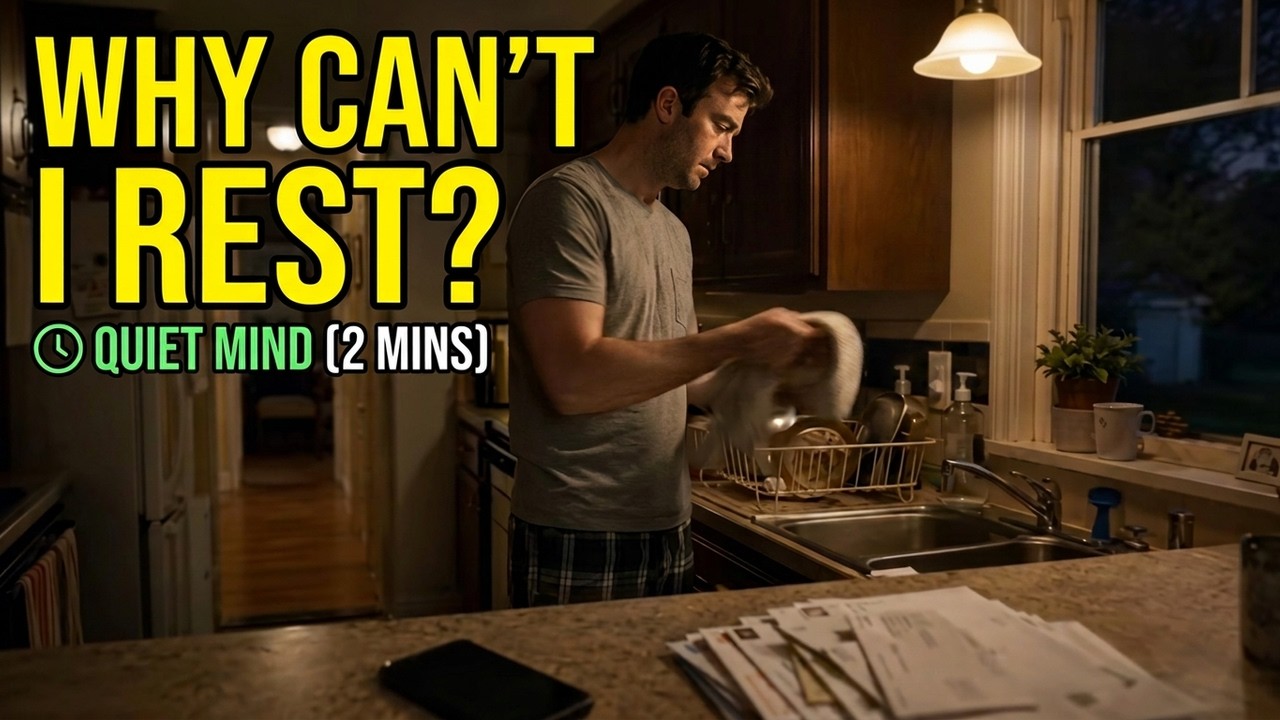
It is late. The dishes are clean, the house is quieter, and your body is ready to stop. Yet your mind is still reviewing the email you did not answer, the appointment you need to make, the form due tomorrow, the birthday gift you have not bought, and the groceries that are running low.
When your to-do list follows you into the evening, it can feel as though rest must be earned by finishing everything. But that standard is impossible. The list keeps growing because life keeps happening.
Gratitude can offer a kinder starting point. Rather than treating every unfinished task as evidence that you are falling behind, you can acknowledge what you have carried today. You can appreciate the care behind the reminders, then give the most urgent items a clear place to go. You do not need to clear your list tonight to deserve peace.
The List That Will Not Turn Off
An unfinished task has a way of interrupting moments that should belong to something else. You may be in a meeting when you suddenly remember a school form. You may be cooking dinner when your mind jumps to an unpaid bill, an empty refrigerator, or laundry that has been sitting for days.
These thoughts are rarely emergencies. Still, they can feel urgent because they are unresolved. One small obligation leads to another, and soon your mind is carrying a stack of tiny decisions at once.
This is why a long list can be exhausting even when you have accomplished a great deal. The burden is not simply the number of tasks. It is the mental effort of trying not to lose them.
A practice of Gratitude does not mean pretending that the list is easy or denying that you need help. It means refusing to turn unfinished responsibilities into a harsh judgment about your worth. You can be responsible, tired, and grateful for what you managed to do, all at the same time.
What You Are Actually Carrying: Cognitive Labor
Much of the work involved in running a home is invisible. Researchers often call it cognitive labor, the ongoing work of noticing needs, considering options, making decisions, and following up afterward.
Cognitive labor includes responsibilities such as:
- Remembering that a child needs a new pair of shoes soon.
- Noticing that the pantry is nearly empty.
- Comparing appointment times and arranging transportation.
- Keeping track of school deadlines, family birthdays, and bills.
- Anticipating what needs to happen before a trip, event, or busy week.
- Following up when a task has been delegated but is not yet complete.
None of this may look like work from the outside. You can be driving, folding clothes, answering an email, or sitting quietly while your mind continues managing the next dozen details.
That is one reason you can reach the end of a day feeling depleted even if your visible checklist does not look impressive. You have been doing work that does not always leave a clear, satisfying mark of completion.
In households with two parents, this tracking and planning work can also be unevenly shared, even when visible chores appear relatively balanced. If that description feels familiar, it is important to recognize that your fatigue is not imagined.
The strain is widespread. The Office of the U.S. Surgeon General’s advisory on parents’ mental health and well-being reports that nearly half of parents say that, on most days, their stress is completely overwhelming. That does not point to individual failure. It points to a real and demanding set of conditions.
Gratitude begins with honest recognition. Before you ask yourself to do more, recognize the care, attention, and decision-making you are already contributing. Naming invisible work does not remove it, but it can make your experience more understandable and less lonely.
Why Finishing Is Not the Only Way to Find Relief
It is natural to assume that an unfinished task will stop bothering you only after you complete it. Finish the call, send the email, buy the gift, and then your mind can relax.
Completion certainly helps. But there is another powerful step that can reduce the mental pull of an open task: deciding exactly when, where, and how you will do it.
Research on unfinished tasks suggests that a specific plan can reduce distracting thoughts about an incomplete responsibility almost as effectively as completing it. The task is still on your list, but it no longer has to keep announcing itself because it has been assigned a future home.
This approach is often known as an implementation intention. Instead of saying, “I need to call the doctor sometime,” you create a concrete plan: “Tuesday at 9:05 a.m., I will call the doctor from the car after school drop-off.” Research on these specific if-then plans has found that they can improve follow-through by linking an intended action to a recognizable situation. You can explore the broader research through the National Library of Medicine’s overview of implementation intentions.
The difference may seem small, but your mind experiences it differently.
- Vague task: Call the doctor.
- Specific plan: Call the doctor Tuesday at 9:05 a.m. from the car, immediately after drop-off.
In the first version, your brain has to keep the task active because there is no reliable cue for doing it. In the second, the task has a time, a location, and a starting trigger. It can stop competing so aggressively for your attention.
This is hopeful news because it changes the meaning of a heavy list. You may not be overwhelmed solely because there is too much to do. Some of the weight may come from having too many open decisions floating around without a plan.
Gratitude can help you meet this reality without shame. You do not have to be grateful for overload. Instead, you can be grateful for a practical tool that gives your attention more room to breathe.
Use the Two-Minute Planning Exercise
You do not need a complicated productivity system to begin. Set aside about two minutes and choose three to five tasks that are taking up the most mental space right now.
Do not try to plan every item on your list. Planning too many things at once can create another exhausting project. The goal is not to control your entire life tonight. The goal is to quiet a few loud, unresolved tasks.
For Each Task, Answer Three Questions
- When will I do this?
Choose a specific day and time. - Where will I be?
Identify the place that makes the task realistic. - What will get me started?
Connect it to a clear cue, such as after drop-off, during lunch, or when you sit at your desk.
Here are a few examples:
- Make the dentist appointment: Wednesday at 12:15 p.m., at my desk, after I finish lunch.
- Buy the birthday gift: Thursday at 7:30 p.m., on the couch, after the kids are in bed.
- Complete the school form: Tuesday at 8:45 a.m., in the car, immediately after drop-off.
- Pay the utility bill: Friday at 9:00 a.m., at my laptop, after opening my calendar.
- Order groceries: Sunday at 4:00 p.m., in the kitchen, before I start dinner prep.
The plan should be specific enough that you will recognize the moment when it arrives. “Later this week” is not a true appointment. It leaves the decision open, which leaves the task free to keep interrupting you.
Once a task has a clear plan, write it down in whatever system you actually use: a calendar, paper planner, notes app, task manager, or family schedule. The best system is not the most elaborate one. It is the one you will return to.
Why This Small Step Can Change Tomorrow
Specific planning does two useful things at once. First, it can lower the volume of intrusive task thoughts today. Second, it makes it more likely that you will follow through tomorrow.
That is why this is more than a calming exercise. You are not trying to feel better while ignoring your responsibilities. You are making a real decision that supports action later.
A few planned tasks can also restore a sense of agency. When everything is vague, your list can feel like a force acting on you. When you decide what happens next, you reclaim a small but meaningful degree of control.
This is where Gratitude becomes especially practical. You can appreciate your capacity to make one clear decision instead of demanding that you solve every problem immediately. You can be thankful for progress that is quiet, ordinary, and incomplete.
Try replacing self-criticism with a more accurate thought:
I have not finished everything, but I have given the next important things a time and place.
That is not an excuse. It is a realistic form of responsibility.
What This Exercise Will Not Do
A two-minute plan is useful, but it is not a cure for every kind of stress. It will not erase a long list, eliminate structural pressures, or make genuinely difficult responsibilities feel small.
It also will not resolve open-ended worries that do not have a simple action attached to them. Concerns about finances, relationships, health, job stability, or a child’s well-being may need a different kind of support, reflection, conversation, or professional care.
Gratitude is not a command to minimize hard circumstances. You do not need to force a positive feeling when you are overwhelmed. A hopeful approach makes room for both truths: some things are truly heavy, and you can still take one manageable next step.
If your load is shared with another adult, clarity may also mean talking openly about cognitive labor. Instead of only dividing chores, discuss who is noticing, planning, remembering, and following up. A task is not fully shared if one person must manage it from beginning to end while another person only performs one visible step.
Build a Quieter Kind of Night
Imagine a typical evening a few days from now. The same home responsibilities exist. Your list is not magically empty. There are still calls, forms, errands, messages, and meals to think about.
But some of the loudest items have already been given a place to live. The appointment call belongs to Tuesday morning. The gift purchase belongs to Thursday night. The bill belongs to Friday at your desk.
Those tasks do not need to keep circling your mind because you have made a decision. Your evening can be more fully your evening.
That is a meaningful form of Gratitude: appreciating rest not as a reward for perfect completion, but as a human need you are allowed to protect. You can honor what remains undone without allowing it to occupy every moment you have left.
Take Two Minutes Tonight
Before you end the day, choose three to five tasks that keep resurfacing. For each one, decide when you will do it, where you will be, and what moment will start it.
Then pause for a brief moment of Gratitude. Notice one thing you handled today, one person you supported, or one small way you kept life moving. It does not have to be dramatic. The point is to see your effort clearly.
You do not have to clear the list tonight. You are not behind simply because it still exists. The next helpful step may be far smaller than finishing everything: give a few unfinished tasks a time and place, and let your mind rest.